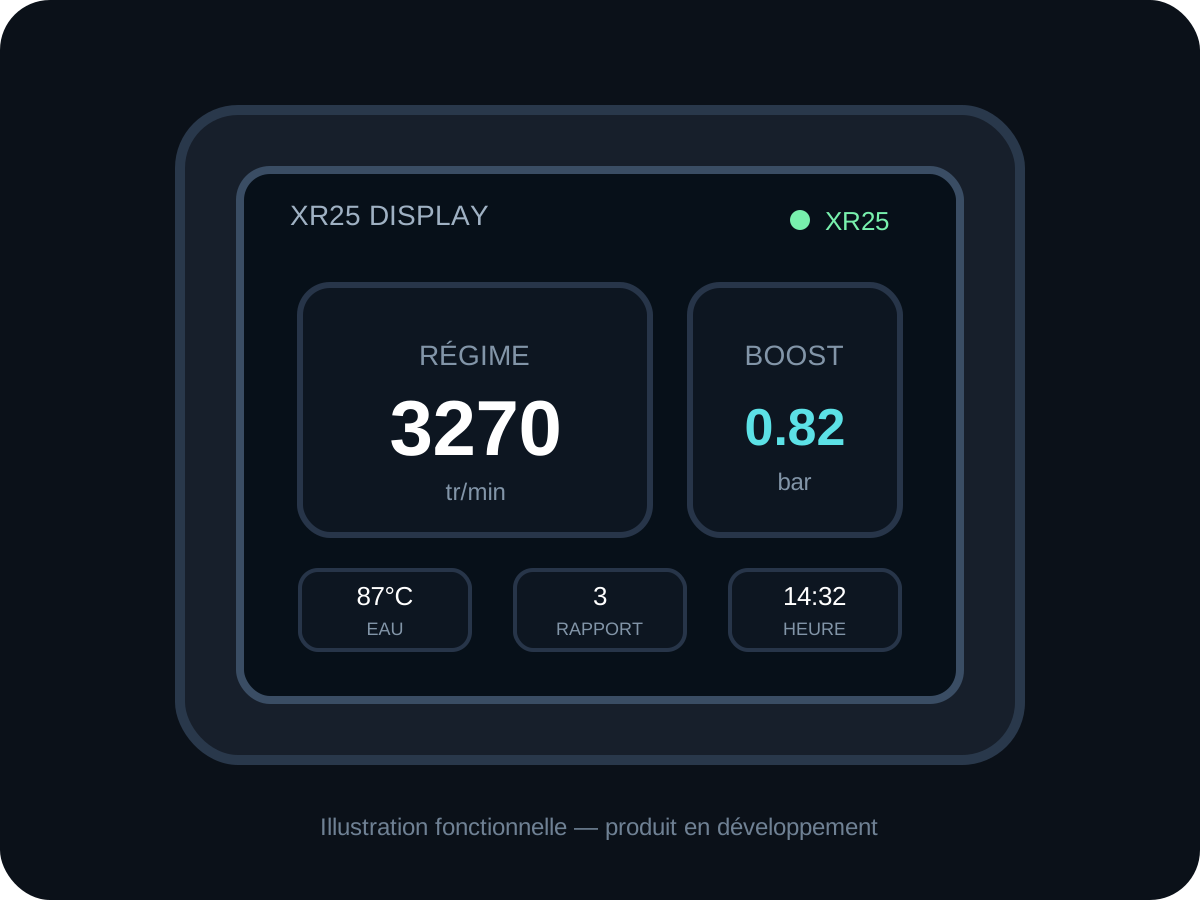
A permanent XR25 display in the cabin
XR25 Display is a standalone screen connected directly to the vehicle XR25 line. It turns ECU data into readable dedicated pages on a color screen that is available as soon as the ignition is switched on.
No PC. No phone.
Unlike XR25 BLE, XR25 Display does not require a smartphone to show information. It is designed as a fixed vehicle instrument: ignition on, the display starts and restores its view.
Pages tailored to the job
The interface is organized into specialized pages. The current 7214-D3 profile defines 25 pages, with 23 enabled by default. Each page can remember its own settings and restore them when you return.
Display examples
- engine speed, boost pressure and temperature
- relative boost pressure
- two temperatures with graphical bars
- 2×2 data grid
- selected gear, pressure and target
- scrolling raw XR25 frame
- clock, stopwatch and logger
Designed for clean integration in an older car
The retained architecture is powered from switched +12 V. Reserve energy provides a clean shutdown when the ignition is turned off. A battery-backed RTC keeps the clock even when the vehicle battery is disconnected. The display remains off with the ignition off.
Current technical architecture
Target integration
The project is intended for integration in Renaults of this generation, including Super 5 GT Turbo, Renault 21 and Clio 1, with an XR25 profile suited to the ECU in use. Exact compatibility depends on the available data profile.
Configuration and updates
A Web configuration interface and OTA firmware updates are part of the architecture currently being finalized. They are not presented here as definitively validated commercial functions until full testing is complete.